A General Guide To Corfu
Corfu - A General Guide.
Below we have compiled a general guide about things to do on the island, information regarding transport and how to get about, festivals, nature and wildlife as well as 'need to know' information about safety, pharmacies and doctors etc.
Transport and How to Get About:
Local Buses: There is a regular daytime bus service operated by KTEL, to and from Corfu Town to all the towns and villages around the island. The green buses are used for the services to the towns and villages and the blue buses operate the centre of Corfu Town and the outskirts. There are timetables posted up at the main bus stops in all the areas and at the main bus station in Town.
Taxis: It is very easy to find a taxi in Corfu Town. There are taxi ranks at the main bus station, the Liston, and at San Rocco square. In all the villages you will be able to find a local taxi. Always check the fare with the driver before you start your journey.
Car Hire: Excel cars, at the Travel Corner offer the best prices and the best cars. You must be at least 23 years of age and hold a full driving licence. The cars at Excel are all properly maintained, have fully comprehensive insurance and are regularly serviced for your utmost comfort and safety. Whilst driving please make yourself aware of speed signs and other traffic regulations. It is the law to wear seat belts. Unwisely, many people do not, but these days it is highly likely that the police will be just round the next bend and they regularly do spot checks. As in the UK, it is also illegal here to be using a mobile phone whilst driving.
Mopeds: At the Travel Corner we do not recommend that you hire a moped or a motorbike. Varying and unpredictable road conditions make for very hazardous driving. However, should you take it upon yourself to hire a moped or motorbike please be aware that it is the law to wear a crash helmet here, despite that fact that many people do not. It is strongly advised that you wear a crash helmet at all times and do not wear shorts and swimwear. Take out full insurance with the bike hire company. It is doubtful that you will be covered by your holiday insurance.
Petrol Stations: Petrol stations can be found all around the town and the outlying villages. The usual opening times are from 07.00 – 19.00. Occasionally they may be shut on a Sunday and it is wise to check local opening times. However, during the summer season, most open daily. If you cannot find a local one, there should be another one operating in the near vicinity.
Beaches:
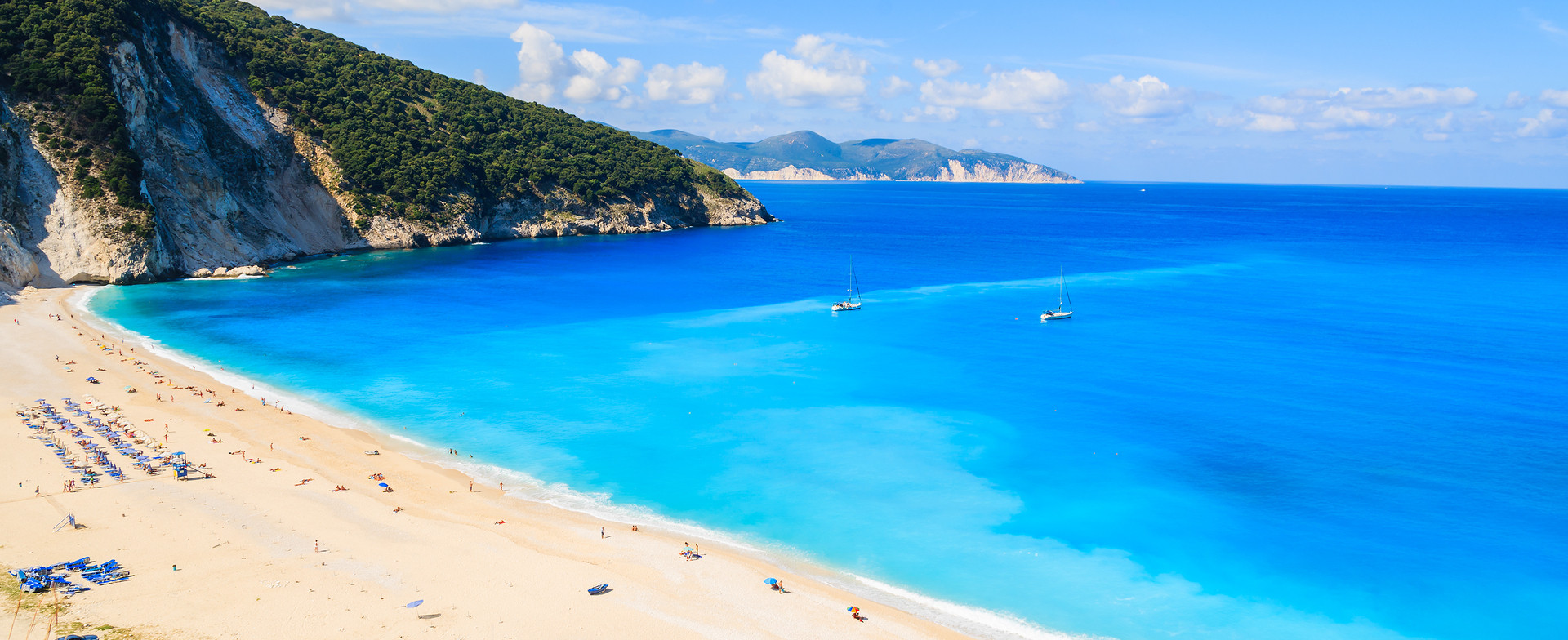
You will not have to travel very far before seeing some beautiful scenery and there are plenty of lovely beaches to visit. Many of Corfu's beaches have been awarded Blue Flags by the EEC in recognition of cleanliness and beach facilities. There is a real mix of pebble beaches and soft, sandy beaches all around the island. It is recommended that you wear some sort of footwear for the beach, mainly for your own comfort.
If you are searching for sandy beaches in the north of the island it is worth visiting Roda, Sidari and Acharavi. They are fairly large resorts with plenty of amenities. There is also a pretty little sandy cove at St. Spiridon. You will find cafes and restaurants along most of the beaches offering a wide choice of food and beverages all day long. Corfu boasts very clean and safe beaches, however, not all of them will have a lifeguard and it is always important to keep an eye on youngsters and weak swimmers. It is very easy to find more secluded beaches along the coast, especially if you hire a car or a boat.
The north east area of Corfu is mainly pebbly. Around Kassiopi, Avlaki and St. Stefanos the coastline is stunning and swimming can be done off flat rocks and shingly beaches. If you enjoy walking, follow the little tracks you come across around the Kassiopi area, along the coast, and you may be surprised to find other quieter beaches. There are some water sports at Kassiopi and sailing in Avlaki. It is a great area for snorkeling. On most of the beaches, umbrellas and sunbeds can be hired at a small cost.
Cricket:
The first cricket match on Corfu took place on Saint George's Day, on 23rd April in 1823. The British Garrison and the Royal Navy made up the two teams. Locals soon took up the game and eventually formed sides to take on the British. Cricket is still played to this day although matches are rarely played on the famous Esplanade in the centre of Corfu Town mainly because of lack of space due to car parking. Corfu remains a favourite destination of touring cricket clubs, especially in the month of July. Over 100 games are played each year, not only against touring sides, but also between the various sides on the island.
Golf:
One of Corfu's little known secrets is its golf course. Situated in the beautiful Ropa Valley, it is well-maintained and an excellent irrigation system keeps the course in perfect condition all year round, especially during the hot summer months. An attractive clubhouse offers a bar, lounge area with snooker and a restaurant. There are also locker rooms and changing facilities as well as a well-stocked shop for all your golfing needs. Tournaments are held regularly throughout the season.
Swimming Pools:
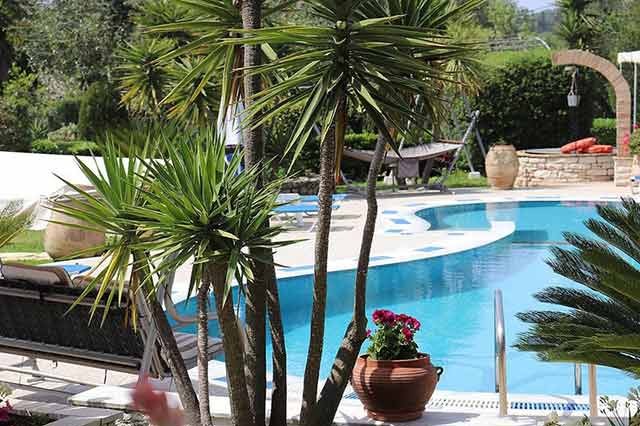
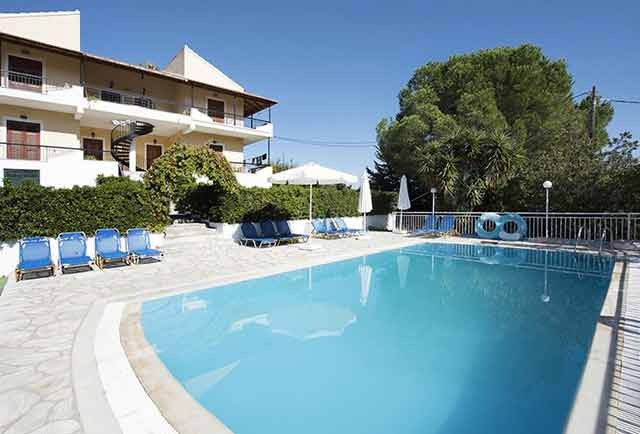
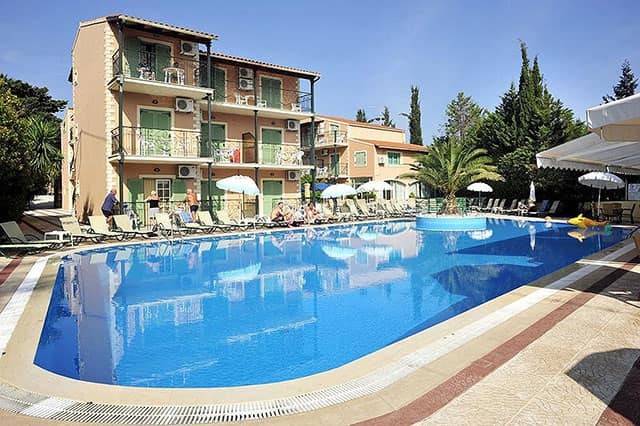
Being brought up in this beautiful area with the turquoise sea surrounding them, Greek people are slightly dubious about using swimming pools. However, most pools are kept up to the health and safety standards required and people use them throughout their holidays. The usual safety rules always apply especially when it comes to the children. It must be noted that no swimming pools have lifeguards on duty, so it is entirely up to everyone to keep an eye on their children and other weak swimmers for the duration of the stay around pools. If you notice the swimming pool at your accommodation is cloudy or appears unclean, you should report it immediately to your travel company or representative.
Inland Areas and Nature:
Corfu is not just about its coastal, beach resorts and lively bars anymore. There is so much more to see. Times have changed and in an age where climate change is making the headlines on a daily basis and we know we have to be more careful about the risks of sunbathing, it is really worth making time for other things whilst you are here. It would be a shame to ignore the remote inland and mountain villages, the fabulous scenery and unspoilt rural areas, the wonderful Greek cuisine and a relaxed, different way of life.
Many people do come to Corfu to relax and spend the days swimming and sunbathing by pools and on beaches, but there are also a great many who also come that want to learn more about the island and the way of life here, and about its people and its history. Therefore it is true to say that Corfu has something for everyone.
Old Perithea and Mount Pantokrator:
The remote village of Old Perithea, set on the northern slopes of Mount Pantokrator, is named after one of the many churches surrounding the area. The name literally translates as ‘around God’ or ‘holy vicinity’. For many years Old Perithea was the capital of the Kassiopi province. Time has certainly turned things around as, around 740BC, coastal settlements were frequently invaded and forced the inhabitants to move to safer regions inland. Fast forward and the residents of this ghost town eventually left to find work in the richer, coastal areas. In recent years a couple of tavernas have sprung up between the crumbling, stone houses and churches and to sit and ponder the past is a most relaxing experience.
Old Perithea is an enchanting village. It was due to be used to film scenes for the Hollywood film “Captain Corelli’s Mandolin”, as it dates back to the time the book was set. It was a perfect spot as original villages in Cephalonia had been destroyed by earthquakes. However, disputes between the municipalities of Corfu prevented filming so the Hollywood team built a reconstruction in Cephalonia instead.
In spring, this valley is a perfect spot for naturalists who can enjoy watching many species of birds, butterflies and wildflowers. It is possible to reach the top of Mount Pantokrator via a path from Old Perithea. The climb will take at least an hour and it leads to the highest point on Corfu. The views from here are spectacular and on clear days there are stunning views of the island of Corfu from every direction. A monastery sits on the summit and there is a pilgrimage here every 6th August to celebrate the Feast of the Transfiguration.
Whilst out traveling you may well come upon other abandoned farmsteads and old villages, originally established by people looking for safe haven from repeated pirate raids on their coastal settlements. Ruins of old villages can be found in other hidden places on the slopes of Mount Pantokrator, such as Old Sinies and on the west side at Rou, where the beautiful old houses are currently being restored and brought back to life to be used as an up-market retreat from the stresses and strains of everyday life.
Wildlife, Snakes and Scorpions:
If you have the opportunity to drive down the small lanes at night, it is a whole new world. April-May is particularly interesting as you will see the beautiful lights flickering of thousands of fire-flies. Nocturnal animals include bats, owls, toads and hedgehogs.
As in other countries, during the summer months there are snakes around. It is quite unlikely that you will see one during your holiday but if you are walking through fields and quiet country lanes it might be wise to be on your guard. There are the usual grass-snakes that are harmless and quite easy to spot as they are fairly large and a brownish colour. The worst thing they could do is make you jump as they slither out in front of you, which rarely happens. However, there are also a couple of types of venomous snake here, such as the Horn Viper and the Montpellier Snake. These snakes can be seen sunning themselves on dry stony areas, such as walls, so have a quick check before sitting down anywhere. However, these snakes don’t just wait to attack anyone passing by, they are instinctively shy and will try to avoid you if they sense any movements. Most people on their holiday will not see a snake.
Scorpions can be found under dry logs and rocks, but can occasionally be found a little too close for comfort. It might be advisable to have a quick check around pots on verandas and balconies but again, it’s not that common for people to come across them. The scorpions’ sting is harmless but very painful and it would be advisable to seek medical help and most certainly in the case of a snakebite.
The Donkey Sanctuary:
The Donkey Sanctuary was founded by an English woman named Judy after finding a donkey wandering alone which did not appear to belong to anyone. She soon found more abandoned donkeys and realised something had to be done and together with friends and volunteers a shelter was opened for these poor neglected animals. Judy has worked tirelessly and relentlessly to gain support and has recently received status as a Greek registered charity. However, despite a considerable amount of financial support from a German based charity, the Donkey Rescue constantly needs funding to allow these people to carry on their good work helping these wonderful creatures. It is possible to visit the sanctuary, which is situated near the village of Poulades near the centre of the island.
Birds:
Corfu is home to a variety of birds and is favoured by migratory birds on their way to and from the winter warmth of Africa. These birds can usually be spotted in the early morning, when you can hear their chirping, and in the evening. They are clever enough to stay out of the midday heat.
If you are familiar with birds you will easily spot Kestrels, Swifts, House-Martins, Swallows and Red-Rumped Swallows. In the coastal areas you may see the Yellow-Legged Herring Gull and a bird called Cory’s Shearwater. Grey Herons and Little Egrets favour the marshy areas.
The mountainous regions are home to the Black-Eared Wheatear and the Blue Rock Thrush while Goldfinches, Greenfinches and Crested Larks like the scrubby areas. The woodland is home to Great Tits, Blue Tits and Coal Tits. Night-time brings out the Nightingales and Scops Owls. During the winter months there are many Red-Breasted Robins.
Butterflies and Moths:
Nature enthusiasts may enjoy looking out for the many beautiful butterflies that can be spotted all over the island on bright, sunny days. Moths outnumber the butterflies but due to their lack of bright colours they are not so easily noticed. Most people tend to notice moths more at night when they cluster round lamps and lighting. Some types of butterflies to look out for include:
Swallowtails - Very elegant, with long tails which extend behind the hind wings.
White & Yellows - Many varying shades of browns, yellows, oranges and whites such as the Clouded Yellow and Bath White.
Nymphalids - Powerful fliers and well known migrants, some are strikingly coloured with very complicated patterns e.g. Red Admiral and Painted lady.
Browns - Varying shades of brown. Often hard to recognize different butterflies of this type as there are many similar ones e.g. Meadow Brown.
Blues - Fantastic colourings, especially amongst the males. Females are often wonderfully ornate on the underside e.g. Long-Tailed Blue.
Skippers - Small, flighty butterflies – duller colouring.
Marine Life:
Despite heavy fishing, Corfu’s waters are still teeming with marine life. Snorkelling and scuba diving are great ways to observe the marine underworld. Warm water species breed during the summer months when the surface waters become warm and salty. Their cold water relatives find sanctuary in cooler waters of greater depth. Species to look out for include:
Octopus - These live between rocks, in shallow water and can easily be seen by anyone snorkelling.
Fish - There are thousands of species which provide great fishing. Grey and Red Mullets are highly likely to end up on your dinner plate. It is very common to find lots of different fish swimming alongside you.
Starfish - You will often see these in a variety of beautiful colours such as salmon, orange and yellow.
Sea Urchins - These move very slowly across the seabed. A delicacy in Corfu and often eaten by locals on Clean Monday. Very easy to spot in the shallow waters of pebbly beaches and protective footwear is a must as the long spines can easily be embedded into your foot.
Crabs - Frequently seen clinging to rocks. There are many species of Hermit Crabs which do not have hard shells and hide in borrowed shells for protection.
Sponges - Bearing little resemblance to our bathroom sponges, these are simple creatures that pump water through a central cavity in their bodies. Eggs form inside the cavity walls and emerge as larvae that drift off to grow into new sponges.
Dolphins - There are often sightings of dolphins in the seas off Corfu. If you are lucky you may spot a family of them whilst you are on a boat trip or hiring a boat.
Greek Cuisine:
Each time you walk into a Greek taverna you will be completely spoilt for choice on what to eat. When in Corfu, you simply shouldn’t stick to eating things that you are familiar with or ‘English-style’. Some of the strangest sounding things are usually the most delicious. Greek cooking is very varied and you will find plenty of things to choose from on most good menus.
A few things to remember when eating out is that fish is usually expensive, and prices quoted are per kilo, not per portion. This is usually not the case when ordering seafood such as squid, (calamari), whitebait and sardines. Occasionally you may find that certain things on the menu are unavailable and this is because most places work on a ‘seasonal availability’ basis whereby at certain times things that are not produced in Greece year round are unavailable locally. This does, however, ensure that everything used is fresh and not brought in frozen.
Eating out is also a very relaxed affair and it is best to adopt the Greek approach to this. Dishes ordered may not necessarily turn up together, but as and when they are ready and occasionally they may be luke warm, as the Greeks prefer it!! Eating out for vegetarians is not usually a problem. Many Greek dishes are vegetarian anyway and many are offered on the menu.
Mealtimes are an important part of the day here. You will notice that the majority of Greek people have their main meal of the day at lunchtime. During the summer season it is often the only time of the day that the families are able to gather together, as someone is always running off to do one job or another, particularly as a lot of the businesses are family-run, so someone always has to be ‘on duty’. The local people also make the most of the summer season to go out to eat in the restaurants and you will also notice that children are welcome everywhere.
Starters:
Generally, British people will order a starter each that are often difficult to choose on a very varied menu. Greek people, on the other hand, will order a wide selection of different starters, put them in the middle of the table and everyone helps themselves to a bit of everything. By doing this, everyone can try a little bit of each dish and on another evening out, you can order all the things you missed the last time. By the end of your holiday you will have tried everything and have some firm favourites to remember on your next visit. Below are listed a few of the many worth trying:
Tzatziki: Yoghurt, cucumber and garlic dip, eaten with bread. Delicious and very more-ish!
Taramosalata: A fish roe dip, with garlic, onions and lemon juice.
Feta cheese: As it is, with olive oil or baked in the oven with tomatoes, onions and olive oil.
Dolmades: Vine leaves stuffed with rice, very tasty. Good for vegetarians.
Saganaki: Cheese fried in olive oil. Type of cheese can vary, but always delicious.
Cheese Pies: (Tiropittes). Cheese, in filo pastry, baked or fried.
Gigantes: Delicious butter beans baked in a tomato sauce. Great for vegetarians.
Spanakopitta: Spinach and feta cheese pies, in filo pastry.
Fried Calamari: Fried squid, served with lemon slices.
Aubergine Dip: Mixed with onions, lemon and garlic. Delicious with bread.
Main Courses:
There are many mouth-watering dishes on the Corfiot menu. Try something different every night. Many people seem to associate Greece only with ‘moussaka’, which is delicious but there are so many more things to try as well.
Pastitsada: This is a Corfiot specialty and one of the favourites. Traditionally made with cockerel but often made with chicken or beef. Cooked casserole style, in a rich tomato sauce. Served with pasta. Well worth trying.
Yemista: Stuffed tomatoes, peppers, aubergines or courgettes. Good for vegetarians but check before ordering because some restaurants stuff them with mince.
Pasticcio: Delicious layers of mincemeat and pasta in a rich tomato sauce, topped with béchamel sauce and baked in the oven.
Sofrito: One of Corfu’s classic dishes. Thin slices of tender beef stewed with wine, vinegar, olive oil, garlic and a big bunch of parsley thrown in. Often served with rice. Delicious!
Stifado: Traditionally made with rabbit but occasionally made with beef. A rich sauce made with shallots, tomatoes, red wine, olive oil, garlic, bay leaves and some nutmeg and cinnamon.
Fish Soup: A very tasty soup made with different types of fish. The vegetables, such as onions, carrots, leeks, courgettes and celery are cooked first and then the fish is added towards the end. Occasionally, the fish is taken out when ready and rice is boiled in the soup to make it lovely and thick.
Bourtheto: If you love fish you must try Corfu’s famous fish stew. Usually, Scorpion Fish is used for this dish. Garlic, paprika and cayenne make for a fiery red sauce.
Giouvetsi: Made with tender chunks of beef and baked in the oven with tiny pieces of pasta, called kritharaki. Can be served up in an instant and is a big favourite with children.
Herbs and Aromatic Plants:
Corfiots use herbs for both culinary and medicinal reasons. Many people grow their own or roam into the countryside to pick them. In most of the supermarkets, herbs and spices are easily available.
Outside many Corfiot homes you may well find a pot of Basil (Vasilikos in Greek). It is very easily grown and as well as providing greenery and a lovely aroma, it can also be picked and popped into the lunch pot. Dill (Anithos) is a big favourite in Greek cookery too. It can be quite strong tasting and if available fennel can be used instead. Parsley (Maindanos) adds plenty of flavour to many savoury Greek dishes. It is available all year round in any supermarket. Oregano (Rigani) is used very often in Greek cookery, sprinkled into many dishes and salads. Celery (Selino) is a key ingredient in many Greek casseroles and soups. Unless you can find the larger sticks of celery, you will have to buy the smaller leaf variety, which tastes exactly the same but can be confused with parsley. A problem easily solved just by checking the aroma.
Camomile is very popular as a relaxing drink and is widely used to relieve many minor ailments, from a slight stomach upset to soothing sore eyes in babies and adults alike. Not many Greek households would be without it.
Paprika and Cayenne peppers are spices that are widely used in Greek dishes. Paprika is known as the ‘sweet’ pepper (glyko) and Cayenne is hot (kaftero). The amount you sprinkle into dishes is, of course, a matter of personal taste. Cinnamon (Kanella) is widely used in many Corfiot dishes, pasta sauces and stews, as well as Nutmeg (Mosxokaritho), and Cloves (Garifalo). Other plants to look out for that are used in Greek cuisine include Bayleaf (Daphni), Rosemary (Dendrolivano), which grows in abundance everywhere and Fennel (Marathos), often used in fish dishes.
Wild greens, or ‘Horta’ in Greek, includes anything that is edible and green and grows in the hills. You will often see Greek women wandering through the fields with a knife and a carrier bag gathering up the horta. Usually, it is simply cleaned and boiled and drizzled in olive oil. Many people will eat it as a healthy accompaniment to fish or just as a side dish. It is often found a bit too bitter to people not familiar with it.
Olive Oil:
It is estimated that there are around 3.5 million olive trees over the island. The olive season lasts from the beginning of November and carries on into spring. Fallen olives were once painstakingly collected by hand but nowadays nets are laid out beneath the trees and the fruit is left to fall onto them. The worker “picking" the olives uses a long stick with a nail or sharp object attached to the end and lifts the net bit by bit till the olives roll into a heap in the middle. They are then collected into a receptacle and leaves and other debris is sifted from them before they are put into sacks to be taken to the olive press. As the harvest season progresses, the look and flavour of the olives change. Olive trees produce their fruit every two years.
The Corfiot olive is generally used to produce oil, rather than for eating. Once upon a time the locals had to rely on the olives as a means of making money, whereas now, with the majority of people working in the tourist industry, many families pick their own olives purely for using as oil for themselves. Olive trees flower during May and anyone that suffers from hayfever should come prepared.
Wine, Retsina and Ouzo:
If you visited someone back in the UK and were offered homemade wine you would probably think they were joking and quickly reach for the more palatable one from the local supermarket. Here in Corfu it is quite the opposite. People here are mad about making their own wine and you will often hear them comparing tastes and colours. There are many types of grape grown here, Greece itself boasts around 250 different varieties. In many tavernas you will be able to try homemade wine as the owner will probably have his own supply, bottled and even labeled.
Retsina is a type of wine made from pine resin. It is most commonly drunk on its own but often people will add lemonade (Sprite) to sweeten it a little. It is an acquired taste to most visitors to Greece but some say it acts as a splendid anti-agent to the comparative oiliness of some of the food and once you’ve got used to it, you will find it hard to resist another glass.
The drink most associated with Greece is Ouzo. It is a clear, aniseed-flavoured spirit made from grapes and it turns a cloudy colour when water is added. It is drunk in many ways and most Greeks will drink it on its own with a couple of cubes of ice or with a splash of water added. Many people new to this drink will drink it with lemonade added. In many cafes and traditional tavernas you may notice the Greeks will enjoy their Ouzo with a small ‘meze’. This is a small plate with a selection of ‘nibbles’ that can range from olives with pieces of feta cheese, to slices of salami, sausage and even chips. In most establishments you can ask for a meze with any drink. An extremely enjoyable way to enjoy your lunchtime tipple.
Greek Coffee:
Greek coffee is in fact a leftover from the centuries long Turkish influence. This thick liquid is served in very small cups and usually it will be accompanied by a glass of cold water. The three most common ways of serving Greek coffee are 'sketo' (no sugar), 'metrio' (medium) and 'glyko' (sweet). The bitter sediment at the bottom is not to be drunk, a mistake made by many newcomers to the drink!
It is also worth trying iced Frappe coffee, served in a long glass, sweetened or unsweetened. Very refreshing during the summer months and very popular with locals and tourists alike.
The Kafenion:
In most of the villages, around the town and along the winding mountain roads you will often come across traditional cafes, called Kafenion. These, traditionally, are the places the locals meet and you will notice there are often small groups of men sat outside drinking Ouzo and Greek coffee. Often it appears there is some kind of heated argument going on, when in fact it is friendly, if not noisy, banter, most probably about the latest village gossip or politics, in which case they probably are arguing, as most Greeks have very strong views on this subject. While women are not banned from these places it is uncommon to actually see any there. Traditionally, they will be at home preparing the family meal and looking after the home. The Kafenion can be found all over the island and during the summer you will often find many tourists, men and women alike, enjoying beer, ouzo, retsina and Greek coffee at these establishments. Visitors are always made very welcome and the locals will often try to make conversation, despite the language barrier. Up in the mountain areas, where people are not so much in a rush you will often find someone ready to tell you all about the place and its past. Many of the stories are very interesting.
Siesta:
Many local people enjoy their afternoon siesta, generally between the hours of 2 and 5, summer and winter. However, mainly this happens in the hot summer months when it is usually far too hot to do anything else. There are no real rules but generally things quieten down during those hours, bars will not have blaring music and even the childrens’ playgrounds will remain shut. The main meal of the day in the Greek household is usually lunch, and often the family will siesta for a couple of hours afterwards in the coolness of their homes. Another reason many people have a siesta is that quite often they have jobs that require working all morning and evening and late into the night, so they really need that afternoon nap. A great many people that come back year after year find that they too enjoy an afternoon nap and adopt it as an essential part of their relaxing holiday. After all, there are many late evenings to enjoy…
General Safety and Minor Hazards:
There are a few things worth mentioning to make your stay on Corfu more enjoyable and comfortable:
Water: It is generally advised not to drink tap water but to buy bottled water for consumption. Many people find it perfectly safe to use tap water for cleaning teeth and for use in cooking if it is to be boiled. It can be used for making tea and coffee etc, but if unsure it’s probably best to stick to bottled water.
High factor sun creams: The sun here is very intense, and as is usually found can cause bad sunburn even on the cloudiest of days. It is always strictly advised for everyone, not just the children, to be covered in high factor creams the whole time they are in the sun. In the case of sunburn or sunstroke the local pharmacy will always advise on the best remedies and in the worst case, recommend a visit to the doctor. Hats and sunglasses are also advised to be used as much as possible. Water and other fluids (not alcohol) are also recommended to be drunk regularly!!
Road Safety: You will notice that in many, if not most of the villages and resorts there are no pavements. Therefore it is very important to keep an eye on children whilst walking down the street. Bearing in mind cars drive on the left here it may even be confusing to older children who are probably quite streetwise at home.
Pharmacies: In the case of minor accidents and ailments look out for the signs which indicate pharmacies, a green cross on a white background. You can buy most holiday requirements over the counter and most of the people that work in the pharmacies speak English.
Mosquitoes: One of the most notorious holiday pests!! If you haven’t brought any repellants with you, you will found everything you need in resort, either in the supermarkets or the pharmacy. There are lots of different devices available and one to meet your needs is sure to be found.
Snakes and Scorpions: As in many other places Corfu has its share of these creatures. There are the harmless grass snakes as well as a couple of other venomous snakes, such as the Horn Viper and the Montpellier Snake. These snakes can be seen sunning themselves mainly on dry stony areas, such as walls, so have a quick check before sitting down anywhere. However, these snakes don’t just wait to attack anyone passing by, they are instinctively shy and will try to avoid you if they sense any movements. Most people on their holiday will not see a snake.
Scorpions can be found under dry logs and rocks, but can occasionally be found a little too close for comfort. It might be advisable to have a quick check around pots on verandas and balconies but again, it’s not that common for people to come across them. The scorpions’ sting is harmless but very painful and it would be advisable to seek medical help and most certainly in the case of a snakebite.
Sea Urchins: These are not venomous but are very common around rocky shorelines. They are black and very spiky and very easy to spot in shallow water amongst the rocks. If you do step on one it is quite important for the spines to be removed otherwise they’ll get infected. If you ask local people what to do they will generally advise you to soak the area with olive oil and this will usually help to draw the spines out. It is advisable to wear suitable shoes in the sea.
Weever Fish: This is one of the worst maritime dangers, but fortunately also very rare. This fish can be found on sandy shores and the problem is that it buries itself beneath the sand with just its poisonous dorsal spines protruding!! Apart from being excruciatingly painful, the very strong venom can cause permanent paralysis to the affected area. In the unlikely event of this happening you need to seek medical help immediately. Although this is very rare it is still advisable for everyone to wear some kind of protective footwear in the sea.
Jellyfish: In late summer it is possible to find jellyfish swimming alongside you. They do come in various sizes and colours, and although not deadly or very venomous they can give a nasty sting. You can find over-the-counter remedies in the pharmacy, but the burning sensation will usually subside within a few hours.
Animals: It is quite common here to find stray dogs and cats roaming the streets. While many of them seem very docile it is not advisable that you touch them or the children play with them. Most probably you will not be bitten but it is unlikely these animals will have been properly inoculated or wormed.
Religious Festivals and Ceremonies:
Religion: The religion in Corfu and all over the rest of Greece is Greek Orthodox. There are churches in all of the villages on the island and each one is named after Greek Orthodox Saints. Most of the churches welcome visitors, provided they are suitably dressed; no shorts, swimwear etc.
Festivals: The most important festival of the Greek year is Easter. Church services are held throughout the week leading up to Easter Sunday. Easter Saturday night, on the stroke of midnight is a time of joy. At this time there is a fireworks display and people greet each other with shouts of “Christos Anesti” (Christ is risen). There is then a big procession of people up the main street, all carrying lighted candles which are taken home and a sign of the cross is made with the candle above the door as a sign of good luck.
Easter Sunday is celebrated with a huge feast of spit roasted lamb and much partying. There are many other festivals which occur throughout the year, and on these occasions there are festivals held outdoors, called Paniyiri, when there will be music, dancing and lambs roasted on spits. These festivals occur in many of the villages across the island.
Pot Throwing Custom: If you are lucky enough to be in Corfu at Easter, the week leading up to Easter Sunday is very exciting and traditional. There are church services held each evening at most of the churches around the island and on Easter Saturday morning there is the remarkable custom of pot throwing. At 11am pots of all shapes and sizes, and some are huge earthenware types, are thrown from the high windows and balconies of Corfu Town to crash down onto the streets below. Obviously, for safety reasons this is quite a controlled affair but it attracts a huge crowd of people and is fun to watch. This custom also takes place all around the island. Explanations for this custom range from it being a reference to Judas’s betrayal of Christ, to prehistoric rituals of pottery breaking at burials, to the joy of the Virgin Mary discovering Christ’s tomb to be empty and even that it derived from the Venetian custom of throwing out old goods at the turn of the seasons.
Carnival: During the 3 weeks before the start of Lent, February-March, carnivals take place around the island, the biggest one being in Corfu Town. The main carnival takes place on the Sunday before Lent, 6 weeks before Easter. It is a real fun atmosphere and every one of all ages dresses up in costumes. Fancy dress parties are held in all the villages. The next day, Kathari Deftera or Clean Monday is the first day of Lent and families celebrate by going on picnics, weather permitting and flying kites.
St. Spiridon’s Day: To honour his miracles, of which he has reputedly saved the island from the plague, famine and the Turks, a major procession of the casket that contains his remains takes place on the 11th August. It is well worth visiting Corfu Town on this day.
15th August: This is a National Holiday to commemorate the Assumption of the Virgin Mary. There are processions and festivals held throughout Greece. Anyone with the names Maria or Marios will celebrate their Name Day on this day and it is a big day for all.
Christmas: Christmas is celebrated here but not in such a big way as Easter. There are lots of church services and the day is celebrated with a big feast of turkey and trimmings just like in the UK. Presents are generally given to children on New Years Day instead of Christmas. People with names such as Christos and Christina celebrate their Name Day and they will often hold a big party and receive presents.
21st May: This is a local holiday, the Ionian Day. It celebrates the Ionian Islands union with Greece, in 1864. It is also a Name Day for anyone called Kostas or Eleni.
Village Festivals: Many of the villages hold festivals, locally called Panayiri, during the summer season. Many of them celebrate miracles that happened in days gone by. During these festivals there will be music and dancing and often lambs are roasted on spits. Everyone, locals and visitors alike are encouraged to join in.
During May, for example, there are festivals in Roda on 1st May, at Sidari, Gastouri and Benitses on the 4th May and in Kassiopi on the 8th May. This particular one celebrates the miraculous healing of a blind boy, called Stefanos, who had unjustly lost his sight for a crime he did not commit. After spending the night in the church of the Panayia Kassopitra his sight was restored. This is celebrated each year.
During June there are festivals held at Lakones and Kontokali among others. On the island of Paxos there is a yearly festival to celebrate St. Gaios at Gaios. July brings festivals at Lefkimmi, Avliotes, Agios Mattheos, Benitses and Ipsos. August 6th celebrates Saviour’s Day and there are pilgrimages to the monastery on the summit of Mount Pantokrator, which is the highest point on the island. The church here is from the 14th century. If you are able, it is well worth visiting as the views from the top are astonishing.
Weddings: It is still quite common here for a couple to get officially engaged before getting married. Traditionally it happens in two stages, the first one being where, in the presence of both families, the couple gives their word to each other. The second stage is more formal and involves more friends and family and there is more of a party mood. During this stage the actual wedding rings are exchanged and worn on the left hand. Often the bride-to-be will be showered with gifts of gold. Occasionally for the duration of the engagement period the future bride may even move into the groom’s family home.
A few days before the actual wedding takes place it is still traditional for a ceremony described as ‘making the bed’. Many of the wedding guests will be invited to this. It’s actually a kind of good luck wish to make the marriage prosperous and involves, traditionally, two young unmarried girls, (nowadays it seems all the women try to get involved and is a very merry affair), who make up the double bed in new white linen and lace. Then, all the people present throw money onto the bed. Finally a young male child is thrown onto the bed, again traditionally, in the hope that the first-born child is a boy. This ceremony is still carried out but nowadays most people generally wish for a healthy child, boy or girl. Some of the older generation does still wish for the firstborn to be a boy, but these days this is quite an old-fashioned view.
Baptisms: Children in Greece are mainly baptized during their first year. Traditionally the godparent is the person who was best man at the parents wedding, (the koumbaros), but nowadays that is rarely the case. It is usual for the parents to wait for someone to offer to be godparent rather than to ask the person they really want, but again times have changed slightly and, quite often the parents will decide who they want to be godparents and ask them first.
For the baptism ceremony it is the obligation of the godparent to buy all the necessary items required. These include a full set of clothing for the child, a gold cross, a large elaborate candle, soap for the priest to wash his hands afterwards, cotton wool, a small bottle of oil and a large piece of square, white material and a towel. These latter items are used to wrap the child in after it is lifted out of the font as the child is rubbed all over with the oil and completely immersed into the water three times. Part of the ceremony also includes cutting off three little bits of hair and afterwards the child is given to the mother to be dressed in its new clothes. The godparent will also pay for any other expenses incurred for the church ceremony.
Most Greek children are only called by their name after they have been christened and usually up until the ceremony, babies are referred to as ‘beba’, for a girl and ‘bebis’ for a boy. However, it is not uncommon nowadays for the parents to decide what their child will be called and start calling them by their name from birth. If the name becomes public knowledge but the parents still refer to the child as ‘bebis’ or ‘beba’, it is the done thing for others to follow suit until it becomes official at the baptism ceremony.
Occasionally, children are baptized when they are older, usually for no other reason than the families just haven’t got round to arranging things. Obviously, in these cases the children, (occasionally even adults), are called by their names, but when they do eventually get baptized the ceremony still requires complete immersion into the water. On these rare occasions another type of suitable receptacle is used, such as a large bowl to stand in, and the priest will pour the water over them. It is still traditional for the firstborn child to be called after the grandfather on the father’s side, this is why in some large families many of the children, cousins for example, have the same names. However times are changing and often the parents opt for another name of their choice and sometimes will use the grandfather’s name as a middle name.
Last but not least....A little bit of Greek for Beginners:
The Greek Alphabet....simply explained...
Alpha................Aα................short a, as in bat
Beta..................Bβ................v sound
Gamma.............Γγ.................guttural g sound
Delta.................Δδ................th sound, as in then
Epsilon..............Eε.................short e, as in echo
Zita...................Ζζ.................z sound
Eta....................Ηη.................long e, as in seed
Theta................Θθ.................soft th sound, as in think
Iota....................Ι ι..................short i, as in bit
Kappa...............Κκ................k sound
Lambtha.............Λλ...............l sound
Mi......................Μμ................m sound
Ni......................Νν.................n sound
Ksi....................Ξξ.................ks sound, like the end of chicks
Omikron............Οο................o sound, as in hot
Pi......................Ππ................p sound
Rho...................Ρρ.................r sound, roll the tongue
Sigma...............Σσς...............s sound, the last ς is used at the end of a word
Taf....................Ττ.................t sound
Ipsilon...............Υυ................ee sound, like the y sound in honey
Fi......................Φφ................f sound
Xi......................Χχ.................guttural sound, like the end of loch
Psi....................Ψψ................ps sound, as in hops
Omega..............Ωω...............o sound, as in often
The Greek language is phonetic and is pronounced exactly as written, unlike a lot of English. Therefore, if you learn the Greek alphabet you will be able to put words together and pronounce them correctly. When you come to Corfu you can practise by looking at signposts or menus and slowly work out what the words are. When you get the hang of it you will see it is not as hard as it looks. The difficult part comes later when trying to put the words together to make sentences and mainly, when trying to use the correct grammar!!
A few helpful words....
Hello/Goodbye.......................Yassou (informal) Yassas (formal) Γειά σου Γειά σας
Good morning........................Kalimera Καλημέρα
Good Evening........................Kalispera Καλησπέρα
Goodnight..............................Kalinikta Καληνύχτα
Thankyou...............................Efharisto Ευχαριστώ (ευ together make ef sound)
Thankyou very much.............Efharisto poli Ευχαριστώ πολύ
Please/You're welcome.........Parakalo Παρακαλώ
Yes.........................................Nai Ναί
No...........................................Oxi Όχι
Cheers....................................Yammas Γειά μας
How are you?.........................Ti kanis Τι κάνεις ;
Fine, thankyou.........................Kala, efharisto Καλά, ευχαριστώ
Very well................................Poli kala Πολύ καλα
How much is it?......................Posso kanee Πόσο κάνει (ει make ee sound)
Sorry/excuse me....................Signomi Συγνώμη
Open.......................................Aniktos Ανοιχτός
Closed.....................................Kleestos Κλειστός (ει together make ee sound)
I don't understand..................Then katalaveno Δεν Καταλαβαίνω (αί make e, for echo, sound)
What time is it?........................Ti ora eenay Τι ώρα είναι ;
Police......................................Astinomia Αστυνομία
Pharmacy................................Farmakio Φαρμακείο (εί together make ee sound)
Doctor.....................................Yatros Γιατρός
Restaurant..............................Estiatorio Εστιατόριο
The bill.....................................Logariasmo Λογαριασμό
Bread......................................Psomi Ψωμί
Beer........................................Beera Μπύρα (Μπ together make b sound)
Wine........................................Krasi Κρασί
Juice........................................Himos Χυμός
Water.......................................Nero Νερό
Tea...........................................Tsai ( like "eye") Τσαϊ
Coffee......................................Kafe Καφέ
Meat.........................................Krayas Κρέας
Chicken....................................Kotopoolo Κοτόπουλο (ου together make oo sound)
Beef.........................................Moskhari Μοσχάρι
Pork..........................................Hirino Χοιρινό (οι together make ee sound)
Fish..........................................Psari Ψάρι
Good appetite!..........................Kali oreksi Καλή όρεξι
Today.......................................Simera Σήμερα
Tomorrow.................................Avrio Αύριο (αυ together make av sound)
Tonight......................................Apopsai Απόψε
Yesterday.................................Xthess Χθές
(The little accent (tonos) above the word indicates which part of the word is stressed)